There’s nothing quite like being watched in silence to make you feel both unsafe and invisible at the same time. Faurel Hill was supposed to be a place of peace – soil, roots and maybe some awkward family dynamics. What I got instead was a security setup worthy of a prison yard and the eerie sense that every move I made was being recorded… just not acknowledged. It wasn’t about safety. It was about control. Because when someone can’t face you like a human, they point a lens at you instead. Bully Yates didn’t need to shout. He had surveillance. No doors slammed, no raised voices – just the quiet click of boundaries being crossed behind your back. The worst part? It works. It crawls under your skin. You second-guess yourself. You whisper. You avoid. You stop feeling like the rightful resident and start feeling like an intruder in your own story. This isn’t about tech. It’s about trauma. And no camera can capture the cost of that.
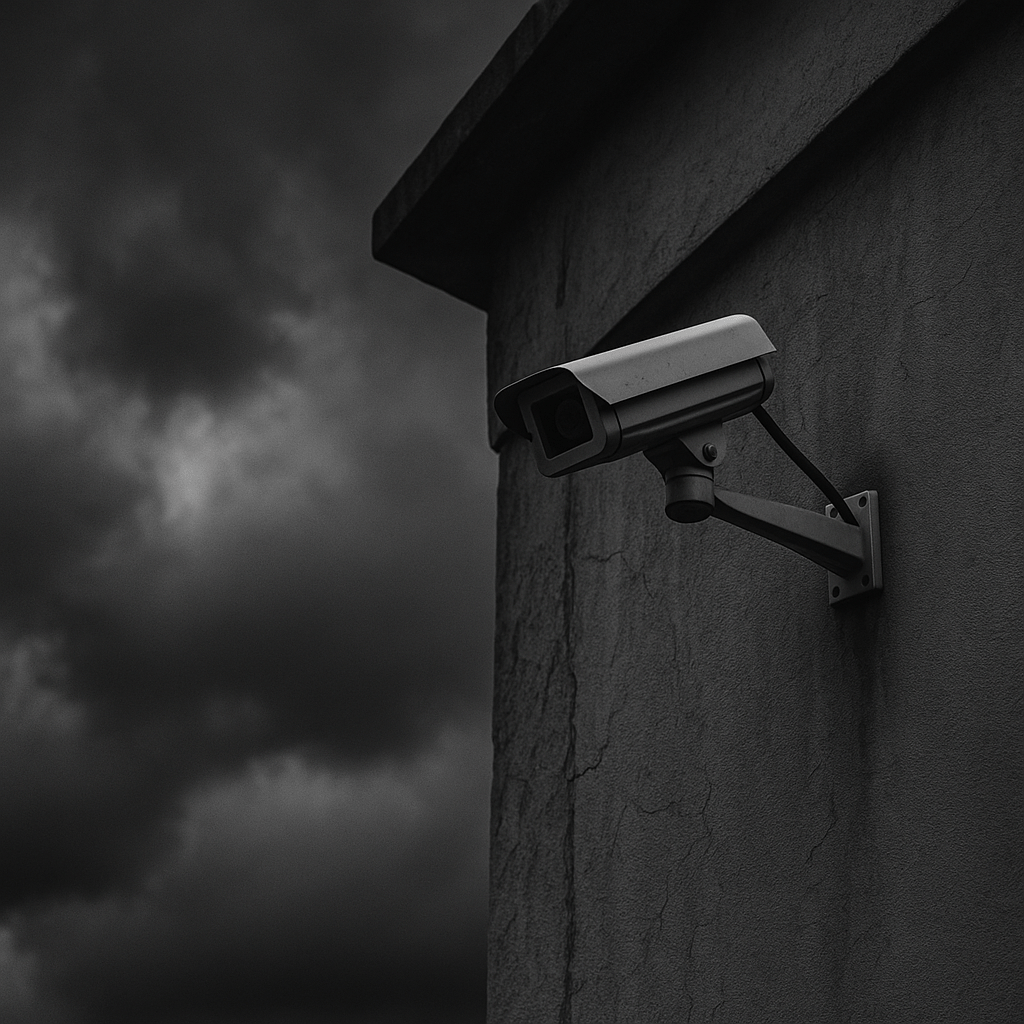
The weaponisation of ‘security’. In theory, security cameras are for safety. In practice, when installed by someone like Bully Yates, they become silent enforcers of dominance. No conversation. No explanation. Just red lights blinking like digital side-eyes saying, ‘We see you and you don’t belong here.’ He didn’t ask. He didn’t inform. The cameras just appeared, like mushrooms after rain – except these spores carried anxiety instead of fungus.This is what happens when communication is too human for someone to handle. They replace dialogue with data, relationships with recordings. It’s not safety they’re after, it’s surveillance dressed up as righteousness. And it’s all perfectly deniable. ‘It’s just for the property’, they’ll say, as if your existence is the threat.
Living like you’re being watched. There’s a special kind of paranoia that settles in when you don’t know where the cameras are or who’s watching. You stop singing to yourself. You hesitate before you walk to the shed. You edit your very presence. The body keeps the score, they say. Mine started keeping tabs, too: shallow breathing, tensed muscles, the quiet dread of being judged without a word spoken. That’s not security, that’s psychological warfare. You don’t just lose privacy. You lose peace. You lose spontaneity. You lose the simple human right to move through your space without feeling like you’re on trial.
Lights, cameras… and a lesson of the day turns out, it’s not the cameras that hurt the most, it’s what they replace. The conversations that never happened. The trust that was never offered. The family that never functioned like one. Cameras don’t resolve conflict. They just record it.
And here’s the lesson of the day: if someone needs to watch you instead of talk to you, that’s not protection. That’s projection. Their fear. Their guilt. Their inability to deal with you as an equal. So let them sit behind their screens. Let them review the footage. Meanwhile, I’ll be over here reclaiming my story – one post, one truth, one brave step at a time. Because healing doesn’t happen under surveillance. It happens in freedom.


 UNDER THE WILL... OVER THE DRAMA...
Leave a reply to Caleb Cheruiyot Cancel reply